In May, we celebrated National Bike Month — a great reminder of all the benefits of cycling and other active mobility options. But it also reminds us that America is maintaining the status quo: a car-centered transportation system that is costing cities lives, money, and time. Communities that fail to rethink their streets are paying the price every day. Taking a Complete Streets approach that prioritizes safe travel for everyone — including cyclists, pedestrians, and transit users — can lead to better physical health and stronger economies.
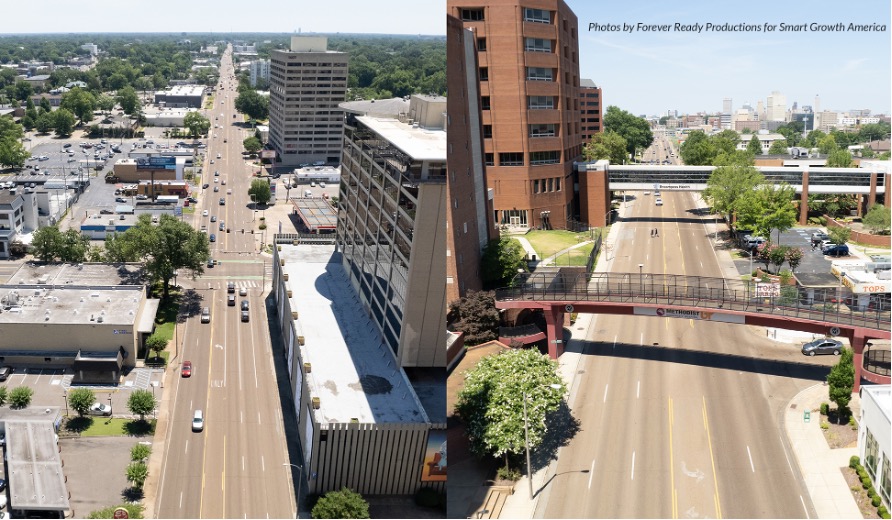
High-speed arterials like this one are dangerous for all road users. (Photo by Forever Ready Productions for Smart Growth America)
Continuing to design streets and transportation networks the way we have in recent decades—with speedy car travel as the central priority—hurts the physical and financial well-being of communities and their residents. Failing to invest in a Complete Streets approach means wasting valuable resources. But communities across the country are taking an important first step to ensure that transportation works for them by adopting a Complete Streets policy.
The price of business as usual is human lives
The most devastating impact of our current approach to transportation and road design is the loss of irreplaceable human lives.
More than 39,000 people died in traffic crashes in 2024. On top of that, crashes injured nearly 2.5 million people. These losses are unacceptable, especially because we know how to do better. One critical step in changing this deadly trend is to prioritize safety for all users over the speed of cars, and design our roads to reflect that. A critical tool for communities that want to change their mobility networks are Complete Streets policies, which establish standards for transportation and infrastructure projects that center safety and promote dynamic, active mobility networks.
It’s also important to remember that each life lost ripples outward — through families, classmates, coworkers, neighborhoods. Those costs don’t appear in any spreadsheet. This trauma can have lasting impacts on the physical, mental, and social well-being of those left behind for years.
The economic impacts of inaction
The human toll alone should compel action. But even if cities focus solely on economics, the current system is unsustainable. The U.S. Department of Transportation estimated that traffic crashes cost the country $340 billion in 2023. These numbers are bad enough, but they’re made even worse when you realize these estimates are probably low because the data we have doesn’t capture every cost of traffic violence. Crashes take a huge toll at the city level as well. In San Francisco, the Budget and Legislative Analyst’s Office estimated total costs of roadway crashes at around $2.5 billion in 2025. In New York City, claims related to municipal fleet crashes alone have cost the City more than $600 million in recent years.
Maintaining the systems that cars require is also incredibly costly. In 2014, the typical cost to reconstruct an existing lane on a principal arterial was nearly $6 million per mile — more than $8 million in 2026 dollars.
These numbers are troubling enough on their own, but it’s not just the government that’s being impacted. Maintaining current car-centric priorities is becoming increasingly expensive at the individual level as well. The cost of owning and operating a vehicle in the United States reached over $12,000 per year in 2024. For context, that’s more than 14% of the median household income for the same year.
Continuing to operate in a manner that prioritizes cars over other modes of transportation is not just unwise; it’s costly. With rising traffic deaths and growing demand for walkability, now is the time to act.
Wasting something we can never get back: time
We’re also paying for our outdated approach to transportation with another valuable resource: time.
The average U.S. car commuter is spending a record 63 hours annually stuck in traffic. The government keeps pouring money into car infrastructure to fix the congestion problem, but we know that isn’t working.
American drivers spend an average of 367 hours driving per year. That’s more than 15 days — a lot of time, especially when you consider the fact that choosing transit, walking, rolling, or biking gives you the freedom to spend your time the way you want to. Instead of staring at the road ahead, you could be reading a book, catching up on news, connecting with friends, getting exercise, and more — all while saving money.
With a commitment to Complete Streets, cities are investing in a brighter future
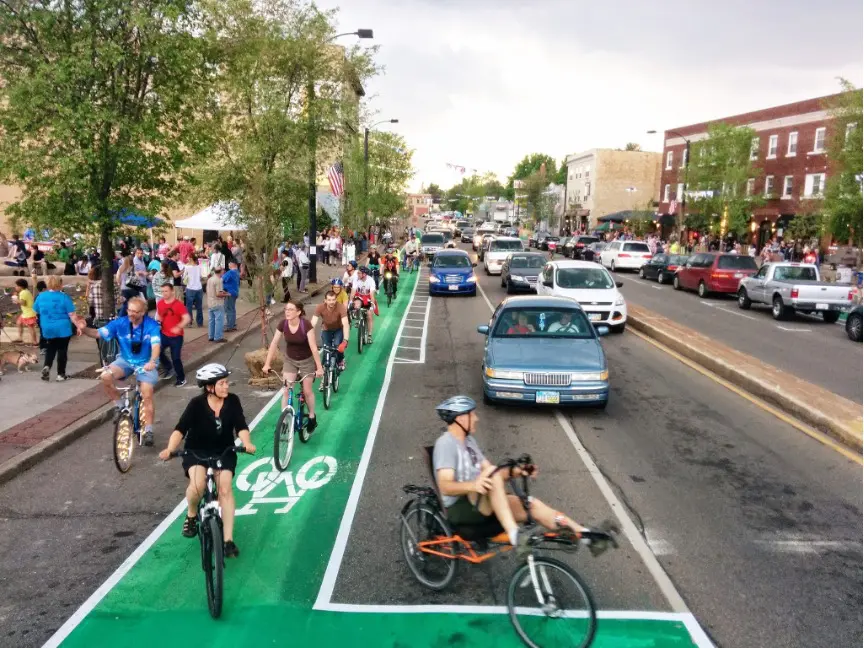
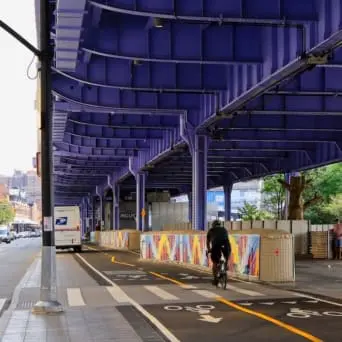
A more Complete Street with a vibrant sidewalk and bike lanes. Photo by Better Block Akron/Smart Growth America
Cities are already showing what’s possible. El Paso, Texas, passed a Complete Streets policy in 2022, joining the 40% of the nation’s 75 largest cities that have earned a CityHealth Complete Streets medal. Smart Growth America and CityHealth work together to help more cities lead the way towards creating safer, more connected communities.
Communities can fight the negative impacts and mitigate the costs of the status quo by committing to a Complete Streets approach — from community engagement to design and implementation. Establishing a strong policy helps communities do this by establishing standards and processes that change the day-to-day practices of policymakers, practitioners, and community members.
- Rethinking our roadways: Good Complete Streets policies set a standard for better projects so that practitioners have guidance to make better decisions that support safe, efficient mobility and reduce the costs associated with the historic number of crashes happening on U.S. roads.
- Moving towards active mobility: Complete Streets policies support efficient and convenient systems for walking, biking, rolling, and taking transit that people actually want to use, and lets communities take advantage of the numerous physical, environmental, and financial benefits active mobility brings.
- Changing the conversation: The negative impacts of traditional, car-centered design are still being framed as unavoidable tragedies, “accidents”, or blame pedestrian behavior. Formally committing to a Complete Streets approach by adopting a policy signals to everyone that the city is going to put safety first by centering people, not the vehicles they drive.
Adopting a Complete Streets policy isn’t a guarantee against tragedy on the road. But it is the clearest signal a city can send that safety, not speed, is the standard. Tucson, Boston, Seattle, and dozens of other cities are already doing this work, and they show that change is possible.